


Part of the Accidental Techie series, and the Parish Websites series.

At some point, many churches arrive at the same moment.
You realise you need a website — or a better one — and you’re not entirely sure how that decision got made, only that it now involves you.
Sometimes it’s obvious.
Sometimes it’s gradual.
Sometimes it arrives disguised as a perfectly innocent sentence like:
“Well… the website probably needs someone to look after it.”
Congratulations. You are now the Parish Webmaster. (There’s no badge. Sorry.)
Before you panic, take a breath. This happens all the time. You don’t need to become a web expert. You just need to build something sensible, survivable, and kind to the next person who inherits it.
What A Church Website Is Actually For
Let’s clear something up early.
A church website does not need to:
- look trendy
- update weekly
- win design awards
- impress other churches
It does need to do a few very ordinary things, very reliably:
- help people find you
- help them work out who you are
- help them turn up at the right time and place
- help them contact a real human
Think of it less as a magazine and more as a signpost.
If it’s clear, accurate, and doesn’t fall over, it’s already doing ministry.
The Minimum Viable Church Website
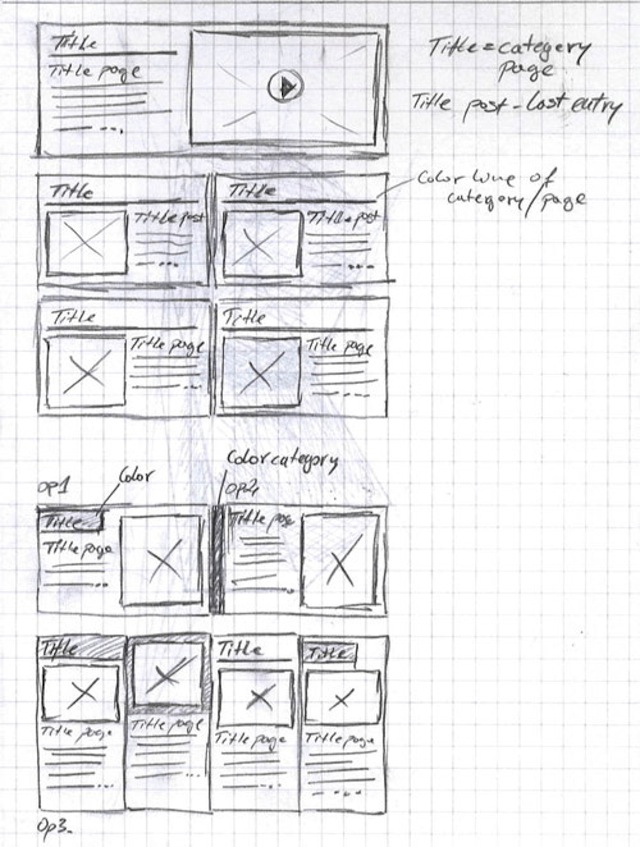
One of the biggest reasons people stall is because they think they need to build everything.
You don’t.
A perfectly respectable church website can be:
- a small set of pages, or
- a single, well-structured long-scroll page that covers the basics clearly.
Both are valid. Neither is a shortcut.
In practice, the core content usually looks like this, whether it’s split across pages or sections on one page:
- Home / Welcome – who you are and what sort of church this is
- Service times and location – clearly, unambiguously, and correctly
- About – a bit of story and context
- Contact – how to reach someone who actually replies
- (Optional) Events or ministries, if you genuinely use them
If all of that lives on one thoughtfully laid-out page, that’s fine. If it’s spread across a handful of pages, also fine.
If your site never grows beyond this, that’s not a failure. That’s a working system.
A Few Decisions You Only Need to Make Once
There are some decisions you can’t dodge — but the good news is that you only need to make them once and then stop thinking about them.
In particular, make sure your site has:
- Backups
Not because disaster is inevitable, but because humans make mistakes and computers are funny beasts. A rewind button is holy. - Basic analytics
Used gently, this answers simple questions like “Is anyone finding us?” and “On what device?”. This is stewardship, not surveillance. This information allows you to make your website better over time. - Clear access control
Not everyone needs admin access. Future-you will thank present-you.
If you do nothing else, do these things and move on.
Why WordPress Is a Sensible Default
There are lots of ways to build a website these days. Some are quicker to start. Some are shinier on day one.
WordPress is still a sensible default for churches because it does a very unglamorous but important job well:
- it’s widely used and well supported
- there are plenty of themes that assume boring but faithful content
- it doesn’t require a full-time web team
- it copes remarkably well with volunteer turnover
It’s not perfect. But it’s forgiving. And forgiveness turns out to be a surprisingly important design feature in church life.
Updates: Accuracy Comes First. Everything Else Is Optional.
Before you worry about how often the website is updated, worry about whether it is correct.
If something changes —
- service times
- locations
- contact details
- people named on the site
… then the website should change too. Now.
An out-of-date website doesn’t just look a bit sad; it quietly misleads people who are trying to find you. That’s not great hospitality.
Once the basics are accurate, everything else becomes a strategy decision.
Ask two honest questions:
- What are we actually trying to achieve with this site?
- What can we realistically sustain?
If you decide:
- monthly posts — then post monthly
- quarterly updates — completely fine
- occasional notices only — also valid
What matters is that you do what you said you would do.
A quiet, accurate, predictable website serves a parish far better than an ambitious one that runs out of steam after three enthusiastic weeks.
Rule of thumb:
under-promise and over-deliver.
You Don’t Have to Do This All at Once
“Building a website from scratch” sounds enormous, but in practice it’s a finite, learnable process.
Most of the fear comes from not knowing where to start, or from thinking you have to get everything right the first time. You don’t.
A working website you understand is better than a perfect one nobody can maintain.
Help exists on a spectrum — from “sit next to me while I do this” to “please just handle it” — and it’s entirely reasonable to choose the level that fits your capacity right now.
If all you do this week is get the basics online and correct, that’s already faithful work.
If you’ve found yourself responsible for a website you didn’t ask for, you’re not alone.
This is doable. And you don’t need to lose your sense of humour — or your theology — along the way.

Peter Lane is Principal Consultant at System Design & Communication Services and has over 30 years of experience with Technology systems. We invite your questions, suggestions and ideas for articles. These can be submitted either through the editoror by email to dct@dct.org.nz. We also operate a website focused onbuilding a community of people interested in improving how we use technology in churches, located at dct.org.nz.